
Where Middlesex County Mugshots Actually Live
There is no Middlesex County mugshot gallery. There is no county booking-photo roster, either. The reason is structural. Connecticut unified its county jails and state prisons under one agency in 1968, so the state has no county jail in the sheriff-run sense. The agency that holds custody is the Connecticut Department of Correction, known as the DOC. For a current inmate, the DOC may provide a photograph as part of the inmate information it shares. That is the closest thing to an official booking photo for a Middlesex County case.
The DOC keeps a public inmate search online. It covers people now under DOC supervision and refreshes daily. Two groups sit outside it. Youthful Offender records are not included, and people held only on behalf of federal immigration authorities are not included either. So a photo will not show for those cases. A photo taken before DOC custody is a different record. That arrest photo belongs to the arresting police department or the Connecticut State Police, not the corrections agency.
That split matters for any Middlesex County booking-photo search. A current inmate record may carry a photograph through the DOC. An older arrest image may sit in a municipal police file. The reader's first job is to figure out which record they want. From there, the request goes to the office that made or now keeps it.
The DOC publishes an inmate information page that explains the photograph field and the limits on its public database. You can read the agency's own framing on the Connecticut DOC inmate information page, which documents what the search shows and warns the data can change quickly.
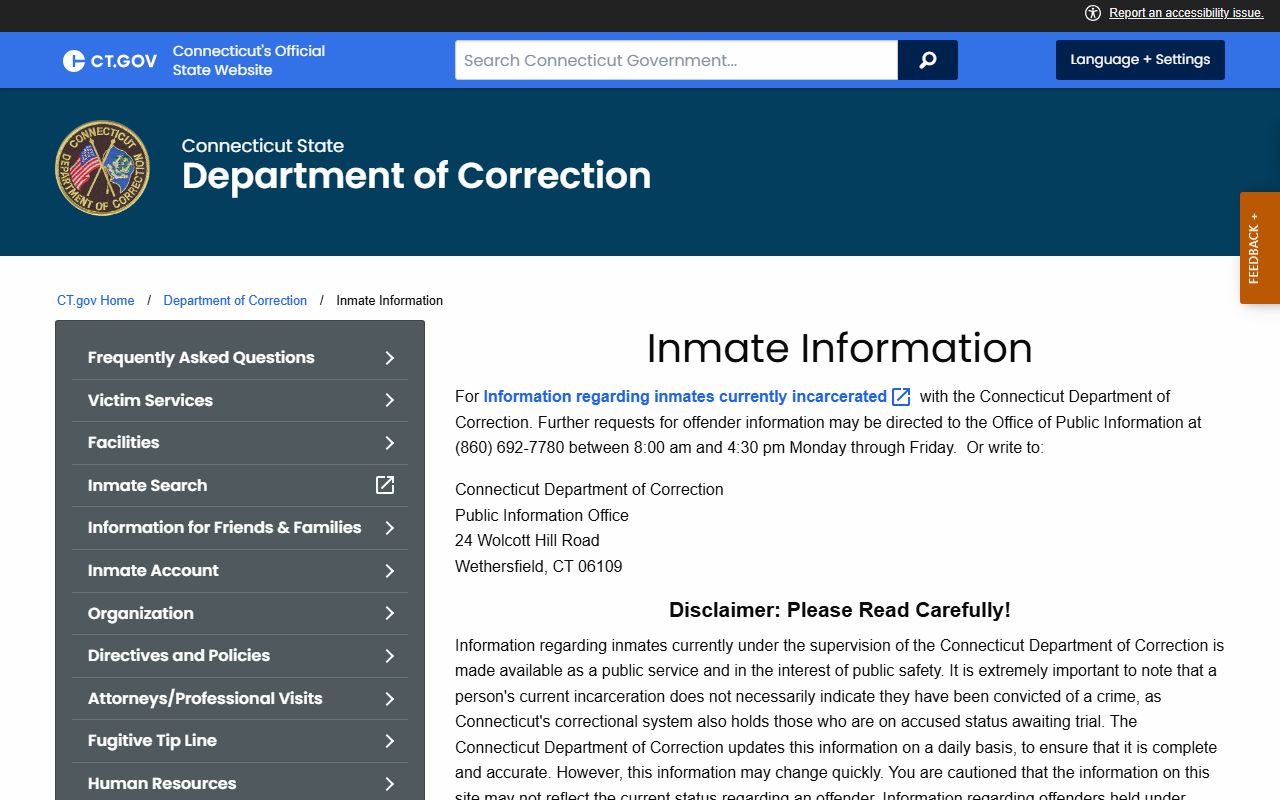
That page is the official source for the photograph note and the daily-update caveat. It anchors why a Middlesex County booking photo is a DOC inmate-record field, not a county gallery item.
DOC Photographs Versus County Booking Galleries
Many states let a county sheriff post fresh booking photos within hours of an arrest. Connecticut does not. The same state agency books pretrial people and holds sentenced people, and it shares records through one search tool, not a public photo feed. A Middlesex County reader who wants a mugshot must adjust the expectation. The DOC may attach a photograph to an inmate record, but it does not run a recent-bookings gallery that anyone can scroll.
The DOC Inmate Information Search is the tool to check first. It lets the public look up a current inmate by DOC number, name, or date of birth. When a record exists, it may include a photograph along with the person's status and offense. The data updates each day. The agency cautions that current incarceration does not prove a conviction, since Connecticut holds accused people awaiting trial. So a photo on a record is not a finding of guilt.
The same search excludes Youthful Offender cases and people held only for federal immigration authorities. A blank result does not always mean the person is free. The person may be in police custody before transfer, out on bond, shielded by Youthful Offender status, or in federal hands. The full roster how-to lives on the Middlesex County jail inmate records page, which walks through every search channel in detail.
Note: A DOC photograph reflects custody at a point in time, and the daily refresh means an image or status can shift before a searcher checks again.
What a DOC Record Shows With a Photograph
A booking photo rarely travels alone. When the DOC shares inmate information, the photograph sits beside a set of identity and custody fields. The agency's own FAQ lists what may appear for a person now in custody. Reading the photo in context with these fields helps confirm identity and avoids mixing up two people with the same name.
The table below shows the field inventory the DOC may provide for a current inmate. The photograph is one row among many. Each field adds context that a bare mugshot cannot.
| Field | What It Shows |
|---|---|
| Name | Public name of the person in DOC custody. |
| Inmate Number | The CT DOC identifier used for search, mail, and money deposits. |
| Date of Birth | Birth date for identity confirmation when names match. |
| Status | Whether the person is sentenced or accused and unsentenced. |
| Controlling Offense | The main offense that drives the custody or sentence display. |
| Current Location | The DOC facility, such as Hartford CC, or a supervision office. |
| Admission Date | The date the DOC took the person into custody or supervision. |
| Sentence Dates | Sentencing date and minimum, maximum, and release dates where they apply. |
| Detainer | A hold from another agency that may affect release, when one exists. |
| Photograph | The DOC says a photograph may be part of the available inmate information. |
| Correctional History | Prior DOC custody detail the agency may provide. |
| Disciplinary History | In-facility discipline detail the agency may provide. |
A detainer is a notice or hold placed by another agency that can keep a person in custody even after the local matter is resolved. The photograph field is marked as something the DOC "may provide," not a guaranteed item on every record. So a Middlesex County booking-photo search through the DOC can return a full record, a record without an image, or no record at all.
Are Middlesex County Booking Photos Public Record?
The honest answer is layered. Connecticut's public-records law is broad. A booking photo can be a public record when a public agency holds it and no exemption applies. Yet no Connecticut statute forces an agency to publish booking photos in a gallery, and the focused arrest-record law does not list a photograph as a required public item. So access depends on which office holds the image and whether a legal limit applies.
The Connecticut Freedom of Information Act, often shortened to FOIA, sets the frame. FOIA is the state law that gives the public a right to inspect and copy government records. The arrest-identification statutes run on a separate track. They require an arrested person to submit to a photograph and send identification data to the State Police Bureau of Identification, and they set rules for returning or destroying those photos after qualifying non-conviction outcomes.
Key statutes:
Connecticut General Statutes § 1-210 gives the public a right to inspect and copy public records unless a statutory exemption applies.
Connecticut General Statutes § 1-215 makes a record of arrest public from the time of arrest, but the required items are name, race, address, date, time, place, offense, and the report, and it does not list a booking photo.
Connecticut General Statutes § 29-12 and § 29-15 require arrested people to be photographed for the State Police Bureau of Identification and set return or destruction rules for those photos after qualifying non-conviction outcomes.
The takeaway is plain. A Middlesex County booking photo can be a public record in the right hands, but release may be limited by FOIA exemptions, sealing, Youthful Offender confidentiality, erased-record law, or law-enforcement and safety concerns. No statute promises a public mugshot roster. The broad definition of a public record sits in Connecticut General Statutes § 1-200, which covers records an agency keeps or receives.
How to Find or Request a Middlesex County Booking Photo
Finding a Middlesex County booking photo is a process of working the right channels in order. Start online, then move to the office that holds the record. The DOC covers current custody. The arresting police agency covers older arrest photos. A formal request fills the gap when nothing shows online.
- Check the DOC Inmate Information Search for a current inmate, searching by name, date of birth, or DOC number, and open the record to see whether a photograph is shown.
- Call the DOC Public Information Office at (860) 692-7780, open Monday through Friday from 8:00 a.m. to 4:30 p.m., for offender information that is not online.
- File a Connecticut FOIA request with the agency that holds the photo, since the office that made or keeps the record is the one that can release it.
- Ask the arresting municipal police department or the Connecticut State Police for an arrest or booking record created before DOC custody.
- Use DESPP Reports and Records through its online system for an incident or report not otherwise available, where the agency lists a non-refundable $16.00 search fee under state law.
The State Police records channel runs through the Department of Emergency Services and Public Protection, often shortened to DESPP. You can begin a report request at the DESPP Reports and Records page, which explains the request system and the search fee. For DOC custody photos, the Public Information Office is the better first call, and a FOIA request to the DOC follows if needed.
Note: A booking photo not shown in the DOC search must be requested from the agency that holds it, and the right office depends on whether the image came before or during DOC custody.
Mugshot Removal and Record Erasure
People often search for mugshot removal after a case ends well for them. In Connecticut, the real lever is record erasure, not a request to a county gallery. Erasure is the legal clearing of a criminal record after a qualifying outcome, such as a dismissal or a not-guilty finding. When a record is erased, the law restricts public dissemination of that erased record. That restriction reaches the underlying arrest information, which is the heart of the matter.
The state's erasure statute is the key tool here. It governs when criminal records are erased and limits who may share them afterward. A separate identification statute provides for the return or destruction of photographs and other identification data for qualifying people with no prior conviction after a not-guilty, dismissal, or nolle outcome. A nolle is a prosecutor's decision not to proceed on a charge, which can later ripen into erasure. Because Connecticut has no official county mugshot gallery, the practical fix is clearing the record at its source rather than chasing a single image.
The erasure rules sit in Connecticut General Statutes § 54-142a, which restricts dissemination of erased criminal records. Clearing the underlying case is the durable approach, and the steps to address charges and dispositions are covered on the Middlesex County court records after a jail arrest page.
Federal and Immigration Booking Photos
Federal and immigration custody sit outside both the Connecticut DOC and any Middlesex County court tool. They also do not offer public mugshots. The federal Bureau of Prisons, known as the BOP, runs an inmate locator, but it is a text record, not a photo gallery. It returns a name, register number, age, race, sex, release date, and location for people in federal custody from 1982 to the present.
The BOP locator is the federal channel to check when a Middlesex County case moves into federal hands. It is searchable by name or register number. You can look someone up through the federal Bureau of Prisons inmate locator, which shows custody details without any booking photo.
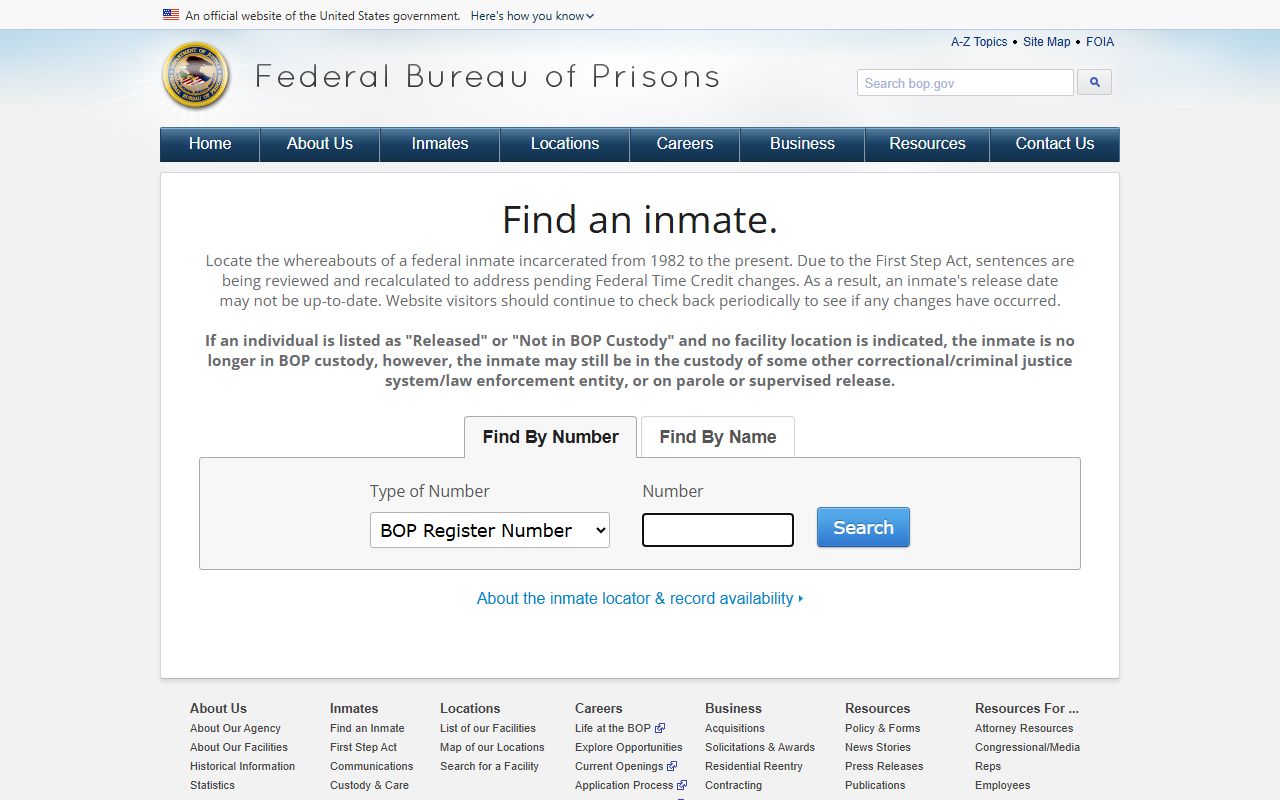
The result screen confirms there is no public federal mugshot. For immigration matters, the ICE Online Detainee Locator System helps locate a detainee but shows no photo. ICE-only detainees are also excluded from the DOC database, so a Middlesex County search will not surface them through the state tool.
What Is and Is Not Public for Middlesex County Mugshots
Pulling the rules together helps set fair expectations for any Middlesex County booking-photo search. The DOC record fields are public for current inmates and may include a photograph. Some records are walled off by law. And commercial mugshot pages, whatever they claim, are not official sources for Connecticut custody data.
What is and is not public: DOC inmate-record fields are public for current inmates and may include a photograph, status, and offense. Youthful Offender cases and people held only for federal immigration authorities are excluded from the public database. Erased records cannot be publicly shared. Commercial mugshot sites are not official sources and may carry stale or wrong data.
One closing caution is worth stating plainly. The DOC warns that unofficial inmate-data sites can be misleading or intentionally inaccurate, and that it does not control them. For an accurate Middlesex County booking-photo or custody answer, rely on the DOC search, the DOC Public Information Office, the arresting police agency, or a proper records request. Those are the sources tied to the record, and they are the ones a court or a careful reader can trust.